Stopping to look
Una conversación sobre fotografía y la manera de mirar
Eugenio Pastor Benjumeda
Photographer ·Teacher of Physics and Chemistry
In July 2015, Andalucía Educativa magazine published an interview in which we talked about teaching, science and photography.
The selection that follows brings together those passages devoted to photography. They reflect the way I understand photography and the way I approach each image. I wanted to bring these pages back because, beyond the context in which they originally appeared, they still reflect a way of looking that has remained with me. They can also be read as a simple statement of intent and an invitation to discover more about the gaze behind the photographs on this website.
Why photography as a form of artistic expression?
I guess that when you want to convey something you see, feel or find moving, you need to choose a form of expression. Photography was the one that caught my attention from an early age.
How and when did you become interested in this form of expression?
I was about fourteen when, during a trip to Barcelona, my cousin lent me an SLR camera, a Yashica TL-electro. It was a fascinating object; one of those things that you perceive as valuable and, at the same time, mysterious.
That experience captivated me. During the same trip, I also discovered the small darkroom that had been improvised in one of the rooms of the house. Watching an image slowly appear on the paper was something that deeply impressed me.
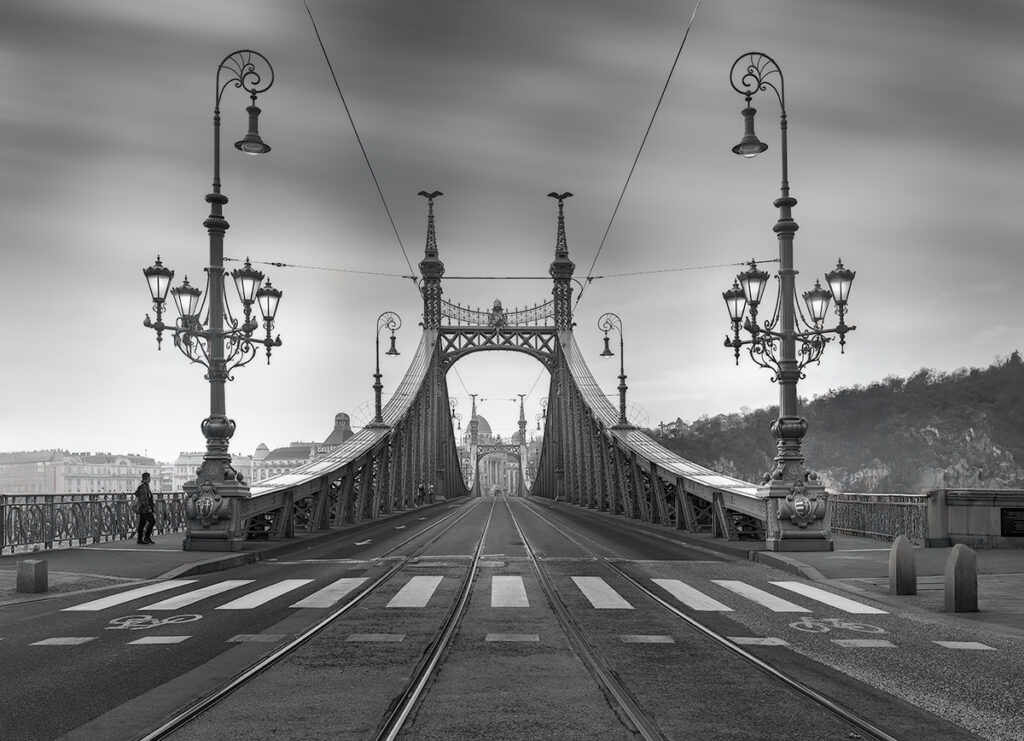
Liberation Bridge · Budapest
What are the qualities of a good photograph? And, by extension, what qualities should a good photographer have?
A good photograph is able to capture your attention, it has to say something, and you should be able to look at it without becoming tired of doing so. Almost nothing…
For me, the two aspects that contribute most to creating a good photograph are composition and light. I believe that a good photographer is always attentive.
“You have to know how to look”
This is what is commonly referred to as having a “good photographic eye”. There are many occasions when a friend tells you, “I was there with you too, but I didn’t see what you’re showing me now in this photograph.”
When you have taken many photographs and suddenly notice a scene in the street without having your camera with you, you can compose it in your mind and, without actually capturing it, imagine how it would turn out.
I mean that you can anticipate the possible results depending on the lens you use and the subsequent processing you carry out on the computer. I believe that this ability to anticipate an image comes, above all, from accumulated experience.
To what extent can a lens be faithful to what our eye sees? Or, in other words, isn’t the human eye the most perfect lens?
Without a doubt, the eye is the most perfect lens. Even so, when a scene catches my attention, I don’t simply observe it with my eyes; I also begin to imagine it.
I think about the finished photograph, and that is when I decide which lens to use. Depending on the lens you choose, you will obtain one result or another, and the difference is enormous. An image made with a wide-angle lens has very little in common with one taken with a telephoto lens.
The choice of lens determines the character of the photograph. It is one of the basic rules. However, it is not always possible to have the ideal lens available. Sometimes a photograph appears unexpectedly and you simply have to make do with the lens mounted on your camera. That too is part of photography.
Can you learn how to look?
That’s a beautiful question. I am convinced that you can. The way we look can also be trained. An architectural photographer eventually develops a different way of looking from that of a war correspondent.
Each person’s perception eventually becomes finer and sharper within their own field of work. It is true that certain abilities help, such as powers of observation, creativity or a certain aesthetic sense, but training the way we look is also fundamental.
I also think that the results you achieve influence the way you look. There is a mutual influence between what you see and what you eventually achieve throughout the whole process, from taking the photograph to finishing its processing.
That is why I believe that the way we look influences the result, and the result shapes the way we look. Satisfaction with the final image also influences the way you look the next time. There are always details to correct, nuances to bring out because they had gone unnoticed, or aspects to remove.
I believe that the way we look is already there, and I also believe that it can be learned and evolves.
“I believe that the way we look is already there, and I also believe that it can be learned and evolves.”
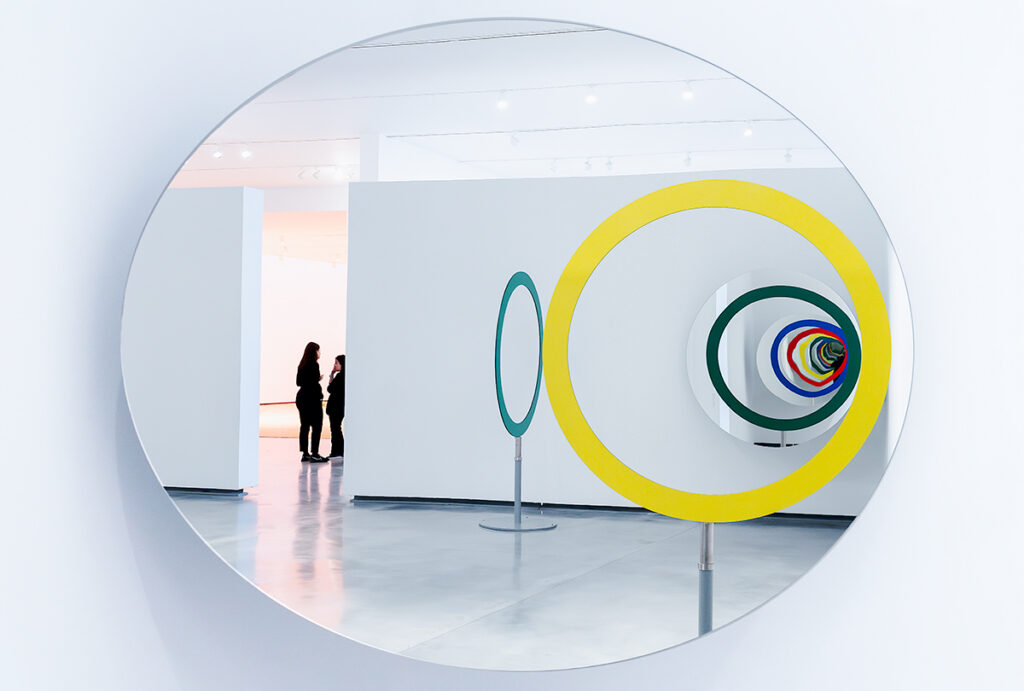
Museum of Contemporary Art · Cáceres
Do you prefer analogue photography to digital photography? In your view, what are the benefits of each?
I learned to take photographs in the days of analogue photography, when cameras used film and the image required a chemical developing process in the darkroom. Obtaining high-quality results was not within everyone’s reach; it required resources, time and a great deal of dedication. For that reason, shooting conditions, composition and the scene itself were chosen with particular care.
Las actuales cámaras digitales de objetivos intercambiables siguen obligándonos a pensar del mismo modo: medir la luz, elegir la velocidad de obturación y la apertura del diafragma. Pero por encima de todo, la esencia de la fotografía permanece intacta: composición y luz siguen siendo los elementos esenciales del mensaje. Lo que ha cambiado es el soporte.
Today’s digital interchangeable-lens cameras still require us to think in the same way: measuring the light, choosing the shutter speed and setting the aperture. But above all, the essence of photography remains intact: composition and light are still the essential elements of the message. What has changed is the medium.
Film has been replaced by a sensor and the darkroom by the computer. This transformation has revolutionised photography and enormously expanded its creative possibilities
However, what initially seems to offer only advantages also has a less obvious side. If you do not select your shots carefully, the work shifts from the moment of taking the photograph to deciding which images are really worth processing.
Overall, I believe that digital photography has brought far more advantages than disadvantages. It has made this form of expression accessible to many more people and, with skill and creativity, makes it possible to achieve results of great quality. But above technology, it still demands the same thing that photography always has: knowing how to look and knowing how to choose.
Which photographers do you admire and why?
There are many photographers I admire. If I had to mention a few, I would choose these:
Ansel Adams, for his perfectionism and his pursuit of maximum detail, which culminated in his “Zone System”. I believe he was a forerunner of the high-resolution image so highly valued today.
Edward Weston, for his elegance and the creativity he demonstrates in his use of forms. He was capable of making a pepper suggest a female nude.
Philippe Halsman, because he brought portrait photography to one of its highest forms of expression.
W. Eugene Smith, for the power and forcefulness of his images, capable of making you invent a story as you look at them.
Steve McCurry, for his extraordinary mastery of colour.
Elliott Erwitt, for his sense of humour.
Abbas, because his images make you stop and think about how lucky you are.
Sebastião Salgado, for the depth of his work, for knowing how to be in the right place at the right time, and because one of his photographs managed to bring a tear to my eye.
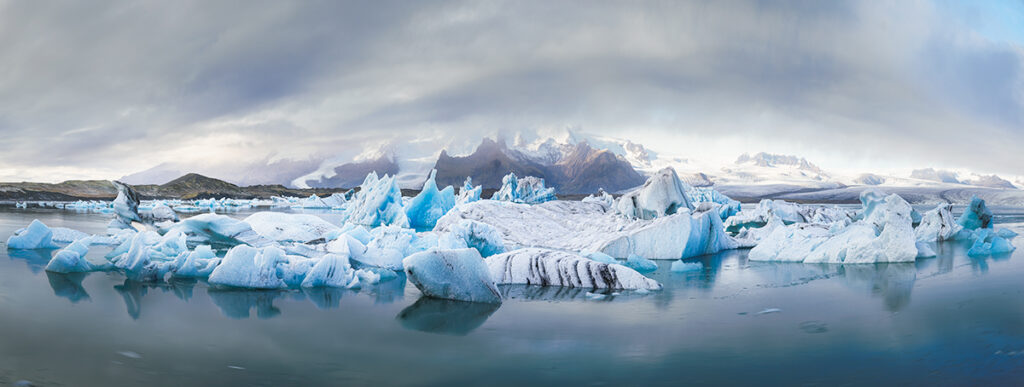
Jökulsárlón Glacier · Iceland
Do you think the use of Photoshop detracts from the authenticity of a photograph?
Good digital cameras produce a RAW file, that is, a file that preserves all the information captured by the sensor. Its great advantage is that it remains intact: any adjustment you make can be modified or undone without altering the original. In a way, it is equivalent to the photographic negative of the past.
Just as film had to be developed in the darkroom, a RAW file requires a digital developing process. This is where programmes such as Photoshop, or any other image-editing software, come into play. That is why I do not believe that using these programmes detracts from the authenticity of a photograph. They are part of the creative process in the same way that the darkroom was part of analogue photography.
Once again, what matters is not the tool, but the gaze of the person behind the camera. Editing a photograph does not mean inventing it; it means completing the construction of the image that was already present in the photographer’s gaze.
A cliché question: how do you reconcile your passion for photography and the creativity it involves with the world of science?
For me, photography is a delight and it naturally coexists with my work as a teacher of Physics and Chemistry. I try to approach both activities with the same creativity, and in both fields I encounter difficulties, but also enormous satisfaction.
Photography keeps me attentive when I have my camera with me, and it also confronts me with frustration when I fail to achieve the image I had imagined. Yet very often the best photographs appear suddenly, when you least expect them.
Teaching is similar in some ways. Every day I try to bring a little enthusiasm to it, because I am convinced that this is what keeps the desire to learn alive. It is deeply rewarding to realise that a group of students, or even just one of them, has understood what you were trying to convey.
Over time I have come to understand that photography and teaching are not such different activities. Both require attentive observation, continuous learning and an attempt to convey something worthwhile. In both, everything begins with the same attitude: knowing how to look.
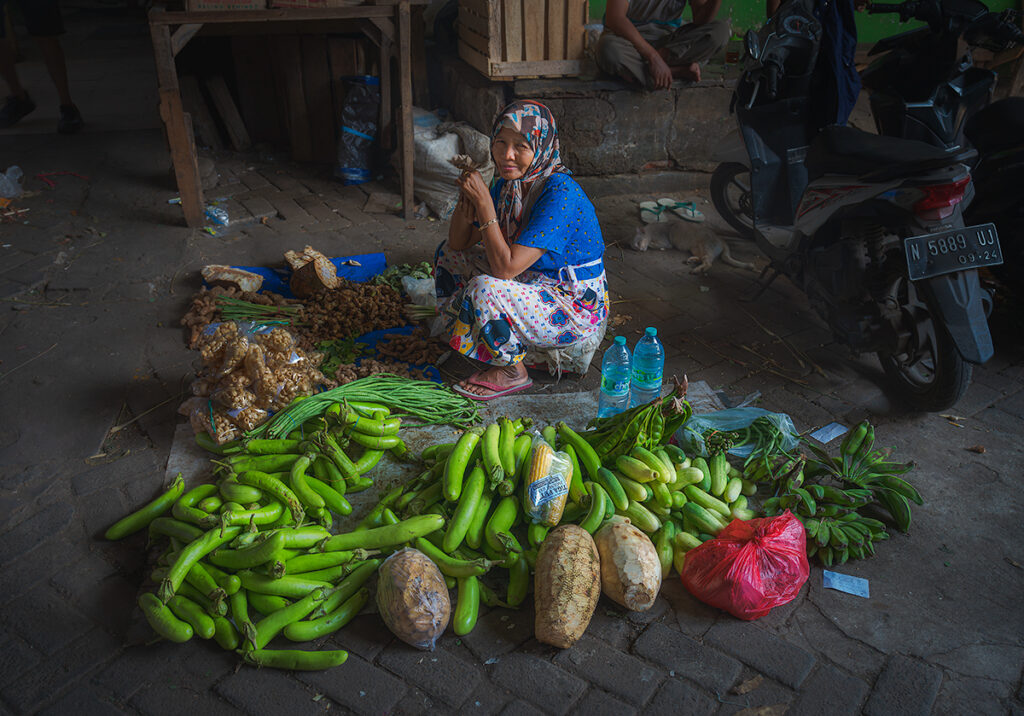
Java Market · Indonesia